Hunger in the nation’s capital: How DC communities are fighting for food justice

Hunger in the nation’s capital is not always visible, but for thousands of residents, it’s a strange rash that starts in the stomach and makes it difficult to focus in class or sleep through the night.
According to 2025 Capital Hunger Report36% of Washington, DC, households experienced food insecurity in the past year. This is the highest rate since the epidemic began. At Howard University, surrounded by both their work and community resilience, I began to understand why hunger is rising in our city and how local leaders are the dominant solutions.
What I found is that these numbers show the inequality of the pandemic-e-ERA, moving food prices, and the new challenges brought by RELLEPLACTION Federal Support Programs. With the expiration of the pandemic-rape period in October 2025, millions of Americans have lost food assistance as costs continue to rise.
Love Newsne? Get more! Join the Newsne Newsletter
We care about your data. See our privacy policy.
At the community fridge on Georgia Avenue, I met residents who lined up before sunrise with milk, produce, and eggs for the afternoon drive. Nearby, college students stretch their dining dollars by skipping meals or relying on food pantries between classes. The same hunger that drives citizens to the fridge also shadows the students. In the city of monuments, the hunger that hides in plain sight.
On the ground, organizations like DC Greens are leading the charge to make food a right, not a right. “We have a saying here at DC Greens that healthy food is a human right,” said Charles Rominiyi, manager of Oxen Run, a DC Greens Community Program. “We know we can grow food in abundance, but we need to remove the barriers that keep people from accessing it. This is where justice comes in.”
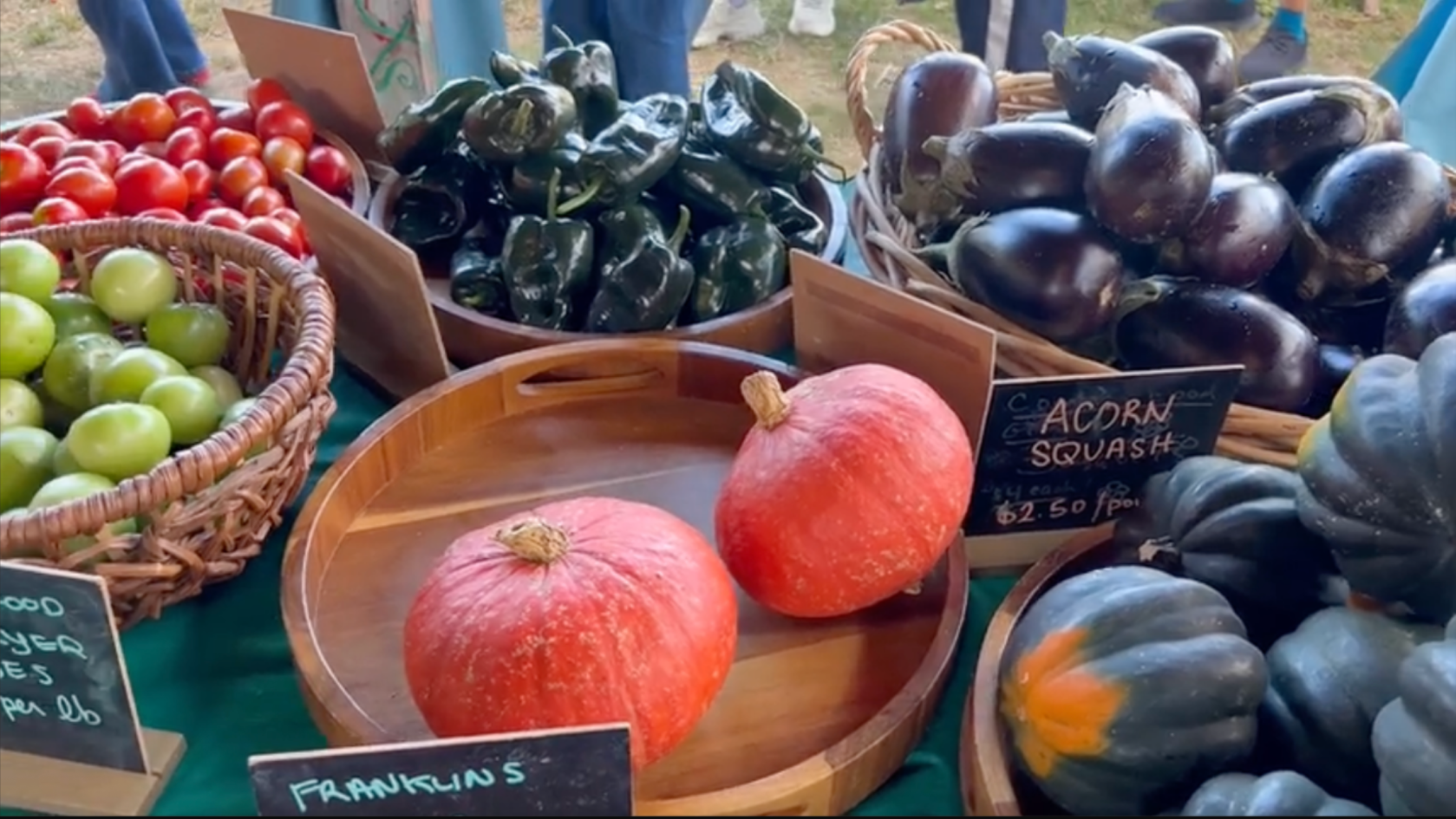
Those hurdles are everywhere, from higher food prices to sanitation regulations that limit public gardens, but local efforts are finding ways around them. At Common Good City Farm in Ledroit Park, residents from all income levels can access fresh produce through the “Pay-Whey-What-You-Can” model. “You have million dollar houses on one side and projects on the other,” explained willingly. “But here, everyone can come in and pay what they can. It’s set up to bring people together.”
The fight for food access doesn’t stop at the farmers market. Through its RX for RX program, DC Greens partners with local clinics to connect patients directly to food sources. “We work with medical centers and doctors to enroll Medicaid patients,” Rominiyi said. “They get their doctors to buy fresh fruits and vegetables. It’s a model that puts healthy food in fridges and pantries and helps reduce chronic disease.”
From Pay-What-You-Can produce markets, Washington, DC, shows that hunger is not only a sign of poverty but an issue of justice.
Zoe cummings Is the top favorite journalism major at Howard University, covering HBCU news, politics and culture. Please send tips to zoe.cummings@bison.Howard.etu and follow on Instagram @ZeeSxphia for more content.
BREAKFUT:
I am a food stamp student. My future depends on Congress
‘Sympathy is hard to find in a big house.’ Howerar student fears termination before holidays