Meet Boye Balogun – Nigeria’s Soft-Power Strategists Using Dubai to Rewrite Africa’s Global Story

“We help brands say what they want to say on the internet as much as possible, and connect with the people who need to hear it,” she said.
Those things clearly stated now sit at the center of one of the most soft power projects in Africa: they are shaping how culture, intelligence and technology can drive national and global products from the Middle East Base.
Incoming General Officer
Balogun is the founder and CEO of futureTech, a new forecasting and media business that combines strategy, intelligence and technology to help brands grow through culture and communication. What began ten years ago as an advertising breakout from mass network advertising has become a trend trusted by governments and global brands alike.
Born in the UK to Nigerian parents, Bologun had an early sense of culture that now defines his global vision, which included 15 markets such as mobile advertising and planning when the industry shook. In 2015 he wrote a business plan on an Emirates flight and decided to launch futureTech. His early wins include HSBC and Uber which gave him a new impetus for business. Population expansion in South Africa, Singapore, Nigeria, followed by Ksa and Kenya soon.
Now an award-winning business, futureTech has become a trusted partner to both global and regional brands. Under Bolun’s leadership, the company has helped emerging technology firms in the Middle East and Africa, scaling their major brands while guiding major airline names for transformation, digital growth and market expansion.
Cultural Cullomat
Today, one of his most powerful clients is the Federal Republic of Nigeria, especially the Ministry of Arts, Culture, Tourism and the Creative Economy. In short: it creates and moves the narrative of power from country to country, suppresses cultural exports, and turns tourism into news and investment. The name of the platform is relatively simple – Nigeria everywhere and it is powered by the FutureTech Region Hub in Dubai, which reflects the city’s growing role as a global hub for culture and innovation.
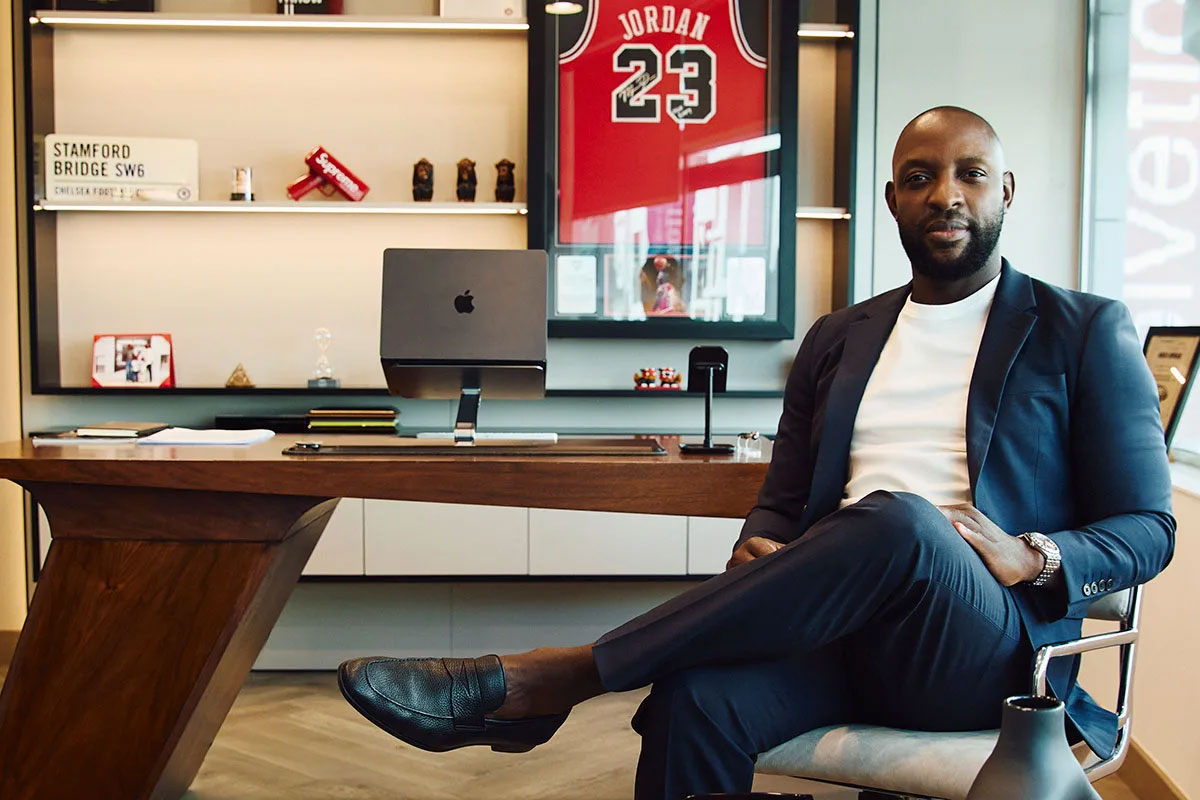
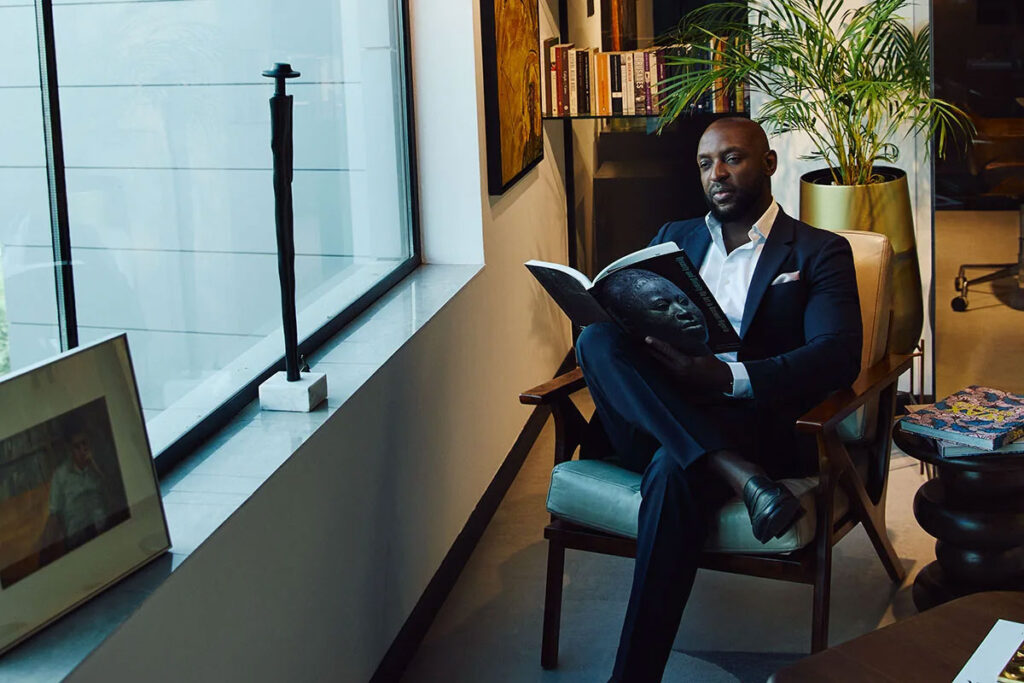
Balogun is proud of his Nigerian roots, and his conference room is decorated with beautiful traditional paintings. (He also has a jersey signed by Michael Jordan but that’s another story). Brief Nigeria was more than just a media buy or campaign. It required a brand keeper to design and manage a national level story. One that can travel from the full assembly of the United Nations and the World Economic Forum in Davos, from the museum boards to the music of the Arenas, and from the Diaspora communities to the first visitors. “Culture is the new fuel,” said Balogun.
Tourism lives within the service sector alongside Nollywood, Afrobeats, fashion, food, museums and creative industries. Balogun’s mandate was to connect the dots, create a coherent platform and take it worldwide. He calls the role “cultural culture” – part brand-building, part costing, part tourism. In the past 18 months, he has met with people who are involved in the government in several states to keep up with the killings.
This campaign is also fake and Balogun often talks about his responsibilities and his Nigerian roots. Representing a country of over 200 million people gave him the opportunity to gain influence on a large scale. You can honestly call it a once-in-a-lifetime opportunity.
Dubai Bridge, FutureTech Connector
Why build a Nigerian Tourism Brand from Dubai rather than Abuja or Lagos? Balogun’s answer is pragmatic. Dubai is an effective blueprint for destination and tourist branding. Think Brand Dubai. It is a diverse source market for tourists and an airline hub with direct connections to Africa. As well as a neutral bridge for the Central-African partnership.
That the bridge is already there. Bourogun supported the involvement of Africa in the Inaugural Africa-UAE Tourism conference, helping to strengthen the creative relationship in tourism between the two regions. It marked the first time that the continent was invited as a United Purset instead of a series of Bible meetings. “The second act of the company” as Bologun Frames it, is the professionalization of this bridge: Systematic market entry and product collaboration that uses both channels – African tourists and tourists to the GCC.
Agile by design
FutureTech decided on a purpose, working as a special group created for the top regional talent, “the smartest people in each market,” said Bourogun, supported by a network of professional collaborators. The model offers agility and White Glove Service while working seamlessly with large networks and brands. “In today’s world, media decisions happen in seconds,” he notes. “AI gives us insights; nature gives us direction. Our strengths include speed, focus and collaboration.” This growth comes down to how the group lives in the present. Balogun is a powerful media consumer and frequent traveller. He is a father of three and listens to the new generation. He says: “Children speak another language. “Ask if they are watching and shopping.”
Speaking of kalogun of the younger generation is excited about what AI can do, but also cautious. He likes speed, measurement and sharp direction. Machines do the heavy lifting. Maintain identity with people. He wrote a post on LinkedIn recently warning that “if we don’t teach our children how to be human, Ai will happily do it for us.” Bourogun explained that while we spend a lot of time talking about Ayi at work, “the real transformation happens at home; how we parent; how we, as parents, teach and prepare our children.” His fate? “Parenting in the age of AI isn’t about keeping up with technology. It’s about living in the place of what makes us human.”
Creators over influence
Balogun has been influencing the curve long enough to see the edges fray. FutureTeTech created the program with the first force it offers five years ago, but he emphasizes the real value that resides with the creators who make his products. He predicts integration: Creators come together in studios with media and products, more like Mini streams than Solo accounts. He likes the unlikely collisions — a soccer affiliate stream, an artist dropping in on an eSports tournament — because they reach younger audiences where TV can no longer.
In Nigeria every place is important. Nollywood and AfroSeats are not “influencer content,” they are cultural industries. The job is to do it for them, remove the conflicts and connect them with the global divisions and sponsors without slowing down. He says: “Compatibility and credibility are reaching. “People are bored.”
His love for sports diminishes this thinking. Jordan No. 23 A sweater hangs behind his office photos. Not FANBOY memorabilia, he insists, but a reminder that timeless performance and clever product design can leapfrog the courts. He says: “It’s good to stand out,” he said. “He brought it to the district and he’s building on it.”
Cultural History
As our interview drew to a close, and we discussed his admiration for the three michaels (Jordan, Jackson and Tyson), Bolun threw a new special story into our story. A new cultural and cultural center for celebrating African culture – and especially Nigerian creativity – is being built in the UAE. The 10,000-capacity destination aims to showcase the continent’s talent in music, art, food and design, positioning Nigeria at the heart of global cultural exchange.
This project, part of the area 2030: Nigeria everywhere is RENTED, is being developed through a public private partnership (PPP) and negotiations are ongoing with the UAE Hur 0 partners to bring the project to life.
Apart from the main performance arena, the development will include an exhibition hall, a Nigerian Culinal area, a retail gallery for the Adchisan Academy to nurture emerging talents across fashion, food, music and storytelling.
This project aims at a symbolic fusion of cultures with a modern cut, to create a brand that unites collaboration between regions.
“This place represents more than just architecture – it’s a cultural bridge between Africa and the Middle East,” Bolung said. “Nigeria has become a global creative hub, and the UAE has emerged as a leader in cultural empires. This space will host everything from mega-head empires – where legends and emerging voices perform alongside. Empowered by Africa.” True to his Word – a culture builder.
This episode appeared as the cover story of CEO Middle East mated Debate, November 2025.