CPI inflation for December will be hampered by a lack of data from the government shutdown

The ‘Big Money Show’ panel discusses how small businesses are being squeezed by inflation, high borrowing costs and corporate governance as Wall Street profits soar and Main Street bankruptcies reach record highs.
The Ministry of Labor is expected to release the December price index (CPI) on Tuesday, which is expected to be visible residual inflation is high above the Federal Reserve’s 2% target as data collection disruptions from the government shutdown continue.
A consensus forecast compiled by FactSet estimates that core inflation rose 0.3% month-on-month in December and 2.6% year-on-year, while core inflation, which excludes volatile food and energy prices, rose 0.26% month-on-month and 2.6% from a year ago.
Economists warn that the 43-day government shutdown that ended in mid-November will not be the only impact December CPI print, but CPI inflation data for the next few months.
“This is going to be a very muddy report because of the lingering questions about the CPI report for October and November,” EY-Parthenon chief economist Greg Daco told FOX Business in an interview. “A lot of information is being affected by the government shutdown.”
MORE DETAILING QUESTIONS AS WARMED POLICY MAKERS DIFFER FOR DECEMBER, MINUTE QUESTIONS

The December CPI report is expected to have a downward bias due to a lack of data collection since the shutdown, economists warn. (Photos by Spencer Platt/Getty/Getty Images)
Daco said strong projects and core CPI rose 0.3% monthly and 2.7% year-on-year in December, with less pressure on energy and food prices. He said there is a risk of inflation at 2.8% due to uncertainty about previous months’ readings and data collection lapses.
“In most price ranges, you actually have people going into stores and measuring prices, and, as a result, government shutdownthose polls were not done,” he explained.
“The BLS decided to use what is called a carry-forward methodology which means that the rates do not change during each month,” said Daco. “Prices are always changing, but that was the assumption used that gave it a low bias for inflation.”
US ECONOMY EXPECTED TO GROW STRONGLY IN 2026 DESPITE STUCK JOBS MARKET: GOLDMAN SACHS
He noted that the price of housing data from rent and owner-occupier rents is where the most problematic bias in the forward-looking method was in housing, as it suggested no change between April and October in housing values because the BLS measures them on a six-month basis.
In addition, the CPI data for November was collected in the second half of the month and Daco noted that the period coincides with a period when “there is further reduction in some keys. Black Friday events, so that could have conveyed the decline in the November data itself.”
Problems with data collection of CPI data for October and November “will represent a slowdown in inflation in April,” Daco added.
US ECONOMY CREATED 50K JOBS IN DECEMBER AS UNEMPLOYMENT RATE FALLS
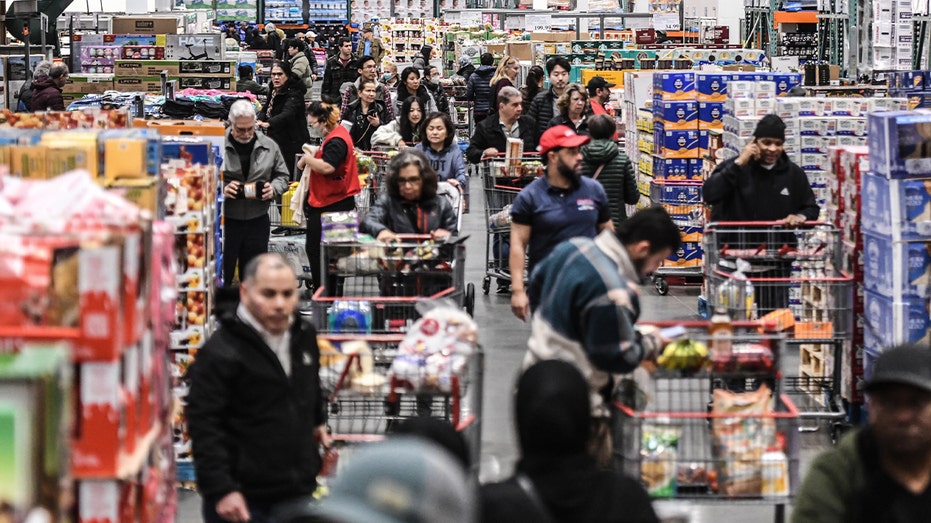
Data disruptions since the shutdown are expected to impact inflation readings in April. (Stephanie Keith/Bloomberg via Getty Images/Getty Images)
He added that there would be some decline in the downward bias of inflation data until April, but warned that “it will not come all at once” and “it is very difficult to say how quickly we will see the decline of the bias revealed by the latest survey and the way forward.”
Oxford Economics also predicts that headline and main CPI will rise by about 0.3% monthly in December and warned that “distortions related to the shutdown will continue to cloud the signal from December’s CPI.”
The firm noted that November’s CPI data for clothing and leisure was “particularly weak” due to the timing of data collection during the holiday discount season, and that “[year-over-year] CPI reading will still be depressed due to housing.”
GET FOX BUSINESS ON THE GO BY CLICKING HERE
“The BLS will continue to automatically print a lower rate of CPI for housing in December, and this bias will not be corrected until April 2026,” Oxford Economics told FOX Business.