– For todayNow you can listen to FOX news headlines!
Specialties: While Nassau County Crestite Bruce Blakeman is weighing a gubernatorial bid, Gen.Kathy.
Blakeman said a decision on his political future is coming “very soon” as he travels across New York State to find out if he has “the support he needs to get to the next level.”
But since Blakeman has reduced his political future, he is sounding the alarm in hochul because it is reported that he plans to add taxes to the agenda of the budget of the sea, according to ZOHRAN MAMDANIORIOSAIRIOS ALERAIGNICATI, according to politics.
“This is a tax on the middle class,” Blakeman told Fox News Digital. “It’s going to make things less expensive. It’s going to drive inflation, and it’s going to make New York less competitive with our record numbers.
New York leader throws more police, ice-hard relations if NYC elects socialist mayor
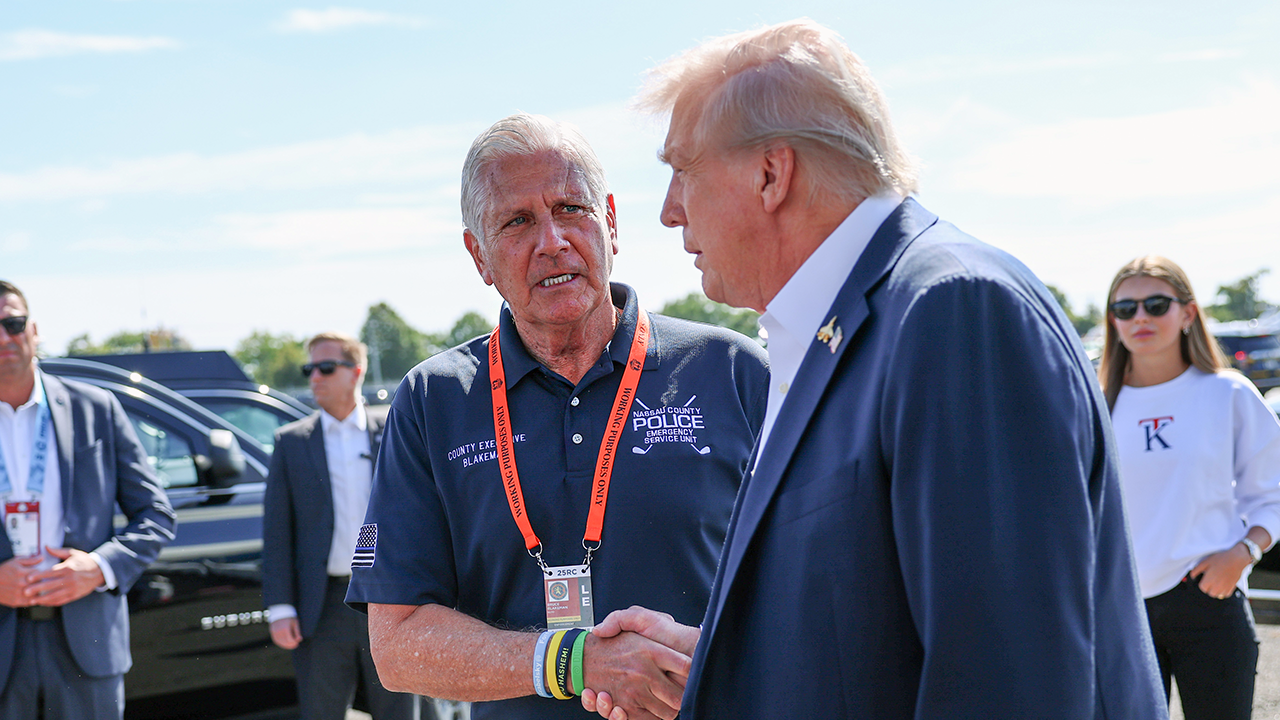
President Donald Trump greeted Bruce Blakeman, County Executive of Nassau County, New York, after arriving at the Republic Airport on September 1. (anna Moneymaker/Getty Images)
Kyle Stroble, Executive Director of the Better Island Association, a leading economic development organization, told FOX News Digital that federal tax increases would be harmful “to the economy of Long Island.
Stefanik ousts hochul as America’s worst ruler at Filery 2026 Launch
“Long Island, whose economy is closely related to New York City, is already facing many challenges, the high cost of living, and the lack of affordable housing for all households and high income earners, who pay most of the state’s income.”
“If this happens, the tax burden has shifted to the middle class of the island. It is clear that this tax proposal will go through a direct conflict to make New York placed in our middle class,” he explained.
ABLI led efforts in 2021 and 2025 to resist the tax proposals coming out of Albany, especially the tax hikes on the top 1% of Yorkers and raising the federal tax rate.
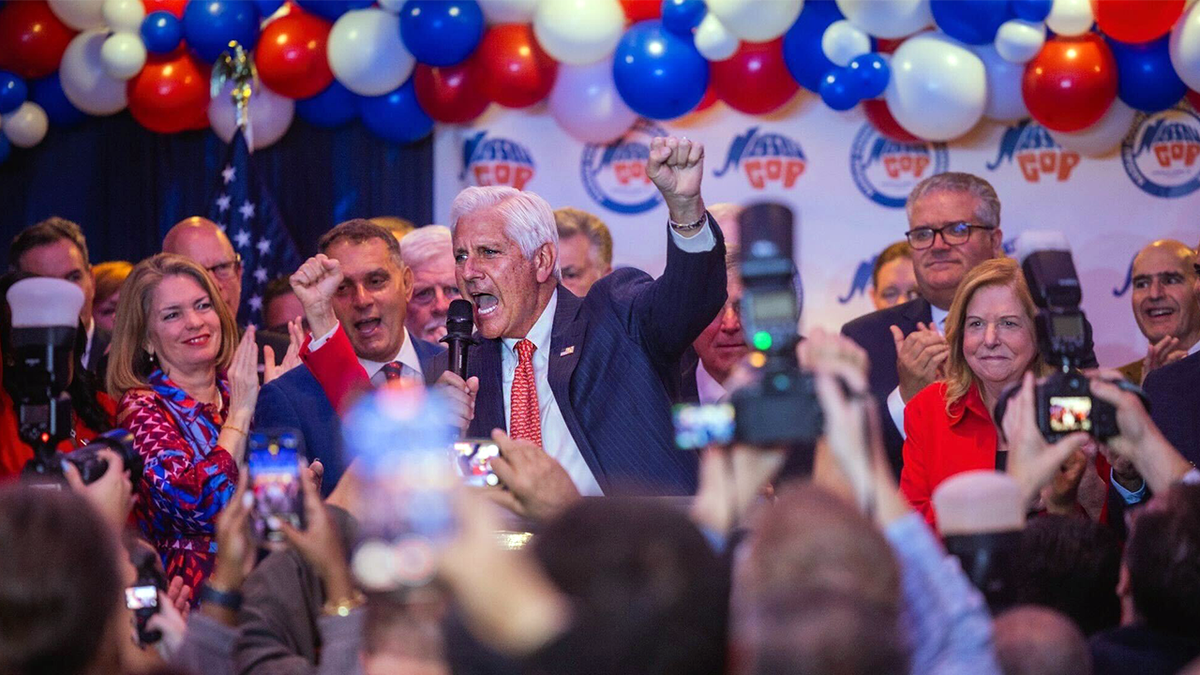
Nassau County Bruce Blakeman celebrates his re-election on Tuesday, November 4, 2025, in Long Island, New York. (Office of the Chief Executive)
Hochul has faced pressure from the social wing of the democratic party to raise taxes so that Mamdani can deliver his ambitious ambitious campaign, including fast buses and free children, grocery stores in the city and supermarkets.
Mamdani campaigned on raising taxes on the top 1% of New Yorkers and raising the corporate tax rate from 7.25% to 11.5% to match the New Jersey average. Any tax hikes would require Hochul’s approval in Albany.
Mamdani laughs off criticism that his tax proposals will force New Yorkers to flee
While the moderate Governor was endorsed by Mamdani after securing the Democratic nomination, the hochul has maintained that he will not increase the rates of the top 1% of New Yorkers – despite Mamdani’s heckling Hoochul supporters.
“This has become a one-party country that has been left-wing, awakened, progressive democratic party, now led by Zohran Mamdani, elected by New York City,” said Mamdani City, a Communist. “
“You’re an anti-American gem,” Blakeman said. “You’re dealing with business. You’re going to destroy the economy of the biggest financial city in the world, the financial capital of the world: New York City. And that’s going to have a material impact on my city,
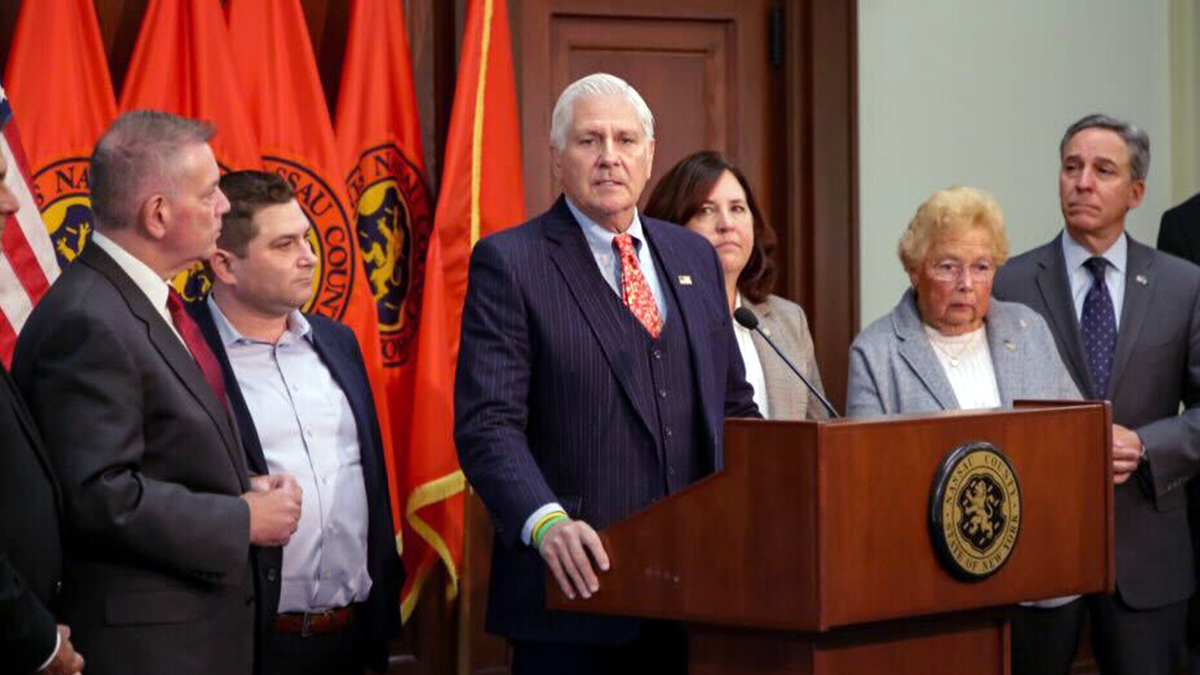
Nassau County Crecite Bruce Blakeman, Center, delivered comments alongside elected officials and business leaders to strongly oppose the federal tax on Monday, November 17, 2025. (Office of the Chief Executive)
Blakeman said hochuls raising taxes on corporations would be “disastrous.” And when asked how the state should approach Mamdani following his overnight success, Blakeman said the leadership of Publiphar
“When he wants to do crazy things, like giving free buses to everyone, which will be nothing more than delusional beliefs, when he wants to raise high-level people, when he wants jobs with them, they should dream with them.”
As NYC elects Socialist Mamdani, neighboring County doubles down on Trump-style leadership with Blakeman’s win
While New York City turned on its excess water on Election Day, neighbors in Nassau Country rallied for Blakeman, a ally of President Donald Trump.
“I won because I stick to American values, American principles. I have not raised a penny in taxes in four years. I said that Nassau Couch does not have them, I found out if he paid attention to being a place of world funding.
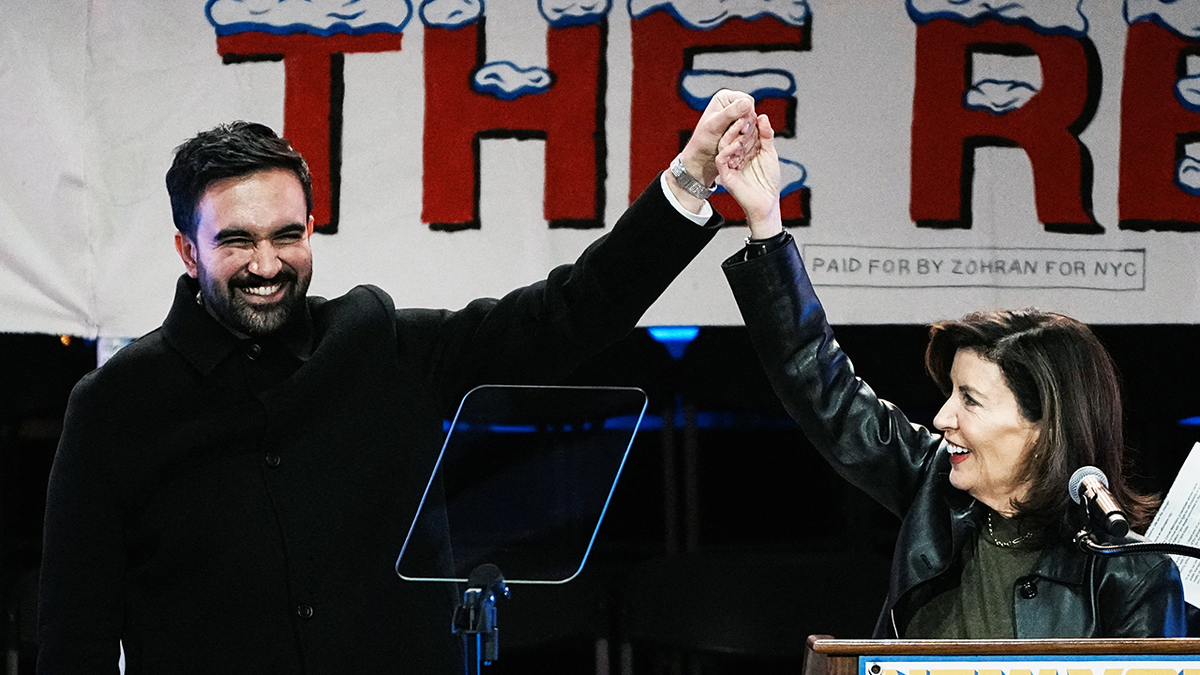
New York City MaMerd Totative zoohran Mamdani and Gov (Eduardo Munoz / Reuters)
When reached for comment, hochul campaign spokeswoman Sarafina Chitika told FOX News Digital that the governor “cut middle-income taxes while putting inflation checks in the pockets of New Yorkers.”
“Bruce Blakeman is an early supporter of Trump’s tax rates that raise costs for families and cut costs for small businesses — and the governor is always focused on cutting costs,” Chitika said.
Click here to download the FOX News app
Since re-election this month, Blakeman said business and political leaders have encouraged him to run for governor, given his experience.
But while rumors snirl about Blakeman’s political future, Elise. Elise Stefanik, Rn.y., Another of his Trump campaign, has already launched his gubernatorial campaign and secured support for New York Republican Governor Ed COX.