
APOLLO Global Management CORCOMIST TORTSTEN SLOK weighs in on President Donald Trumps threat to increase chinas tariffs, his economic outlook and more at Barrons RoundTwable.
A new analysis is coming through Passthrough Tax charges It finds that US businesses and consumers shoulder most of the costs during this period, rather than foreigners.
Goldman Sachs Economists estimated that as of August, US businesses received 51% of the cost of the tariffs, while American consumers were targeting 37% of the burden. They also estimated that 9% of the costs were paid by foreign sellers, and about 3% were reported as possible tax rate discrepancies.
“Our analysis suggests that at the moment, US businesses bear the greatest cost of tax costs because recently there is a moment to raise prices for consumers and negotiate low import prices with foreign suppliers,” wrote soldman Econdon.
The report went on to note that if the newly implemented and newly implemented tariffs end up having the same impact as they have so far, then American consumers will end up getting more costs.
Fed President warns inflation ‘is not as bad’ as tax concerns
American businesses and consumers bear most of the cost of the tariffs, a Goldman Sachs analysis found. (David Paul Morris/Bloomberg via Getty Images/Getty Images)
Goldman experts estimated that by the end of 2025 Buyers will be getting 55% of the tax costs, and 22% will fall on US businesses, 18% on foreign nationals and 5% on receiving tax.
“Our estimate of 22% of our businesses is modest because it is a total influence – companies that use or sell imported goods will protect the competition of the ports, while protected domestic producers will be able to increase their prices and increase their marriages,” wrote their producers.
The Fed’s Favorite Inflation Gauge shows that consumer prices remained elevated in August
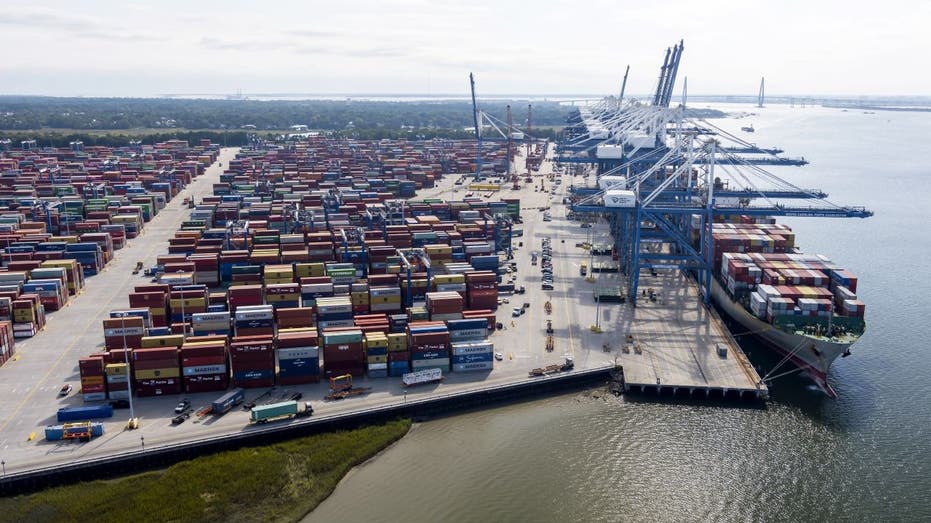
Tariffs on imported goods are paid by the importer, which often outweighs the high cost to consumers at higher prices and can negotiate lower prices from exporters. (Sam Wolfe/Bloomberg via Getty Images/Getty Images)
The Goldman Sachs report also estimated that tax rates have pushed the money supply up by about half a percentage point so far this year and is expected to continue for months.
The analysis found that the cost of personal consumption (PCE) increased by 0.44 percent this year and that with the pass of the price of the cost of the tax that is expected to go from 55% to 70%, Ightation of Core PCE it is expected to increase by 0.6 percent.
As a result, the analysis sees Core PCE inflation at 3% year over year through December 2025, or 2.2% net of taxes. In December 2026, economists estimate Core PCE II-ITERATION will be 2.4%, or 2% net of tax effects.
Fed’s Miran Glowerplays Trump’s tax impact on growth, deflation
The Federal Reserve Policymakers see an UPTICK in inflation this year as tax costs begin to affect the economy and consumer prices, with PCE up 2.9% from August.
Those figures are above the Fed’s 4% target and concerns about the monetary impact of interest rates have prompted policymakers to hold off on cutting interest rates in September amid tightening Labor market.
Find FOX business on the go by clicking here
The Central Bank is expected to cut interest rates by another 25 basis points at its meeting next week, amid uncertainty over economic conditions.