– For todayNow you can listen to FOX news headlines!
From new stealth bombers to AI-powered drones, the US and China are recycling AirPower for the Pacific Showdown – Each bet can keep the other out of the sky.
The US is charging ahead with its next F-47 fighter, while China is scrambling with jets designed to match the F-35 and F-22.
After a short program break in 2024, the Air Force awarded Boeing a contract in March for the F-47, a six-engine fighter designed to anchor air supeet of air supeet. The first flight is expected in 2028.
At the same time, the B-21 Raider, the successful successor to the B-2, is deep in testing at Edwards Air Force Base. The Air Force plans to buy at least 100 raiders – each built to survive inside China’s heavily defended airspace.
The Pentagon is also betting on cooperative combat aircraft, or CCAS – Drones designed to fly side-by-side are counted as ‘reliable professionals.’ Prototypes from Anduril and general anomics are already in the air. Authorities say CCAs will allow a single pilot to control multiple drones at the same time.
China dominates the rest of the world in the commercial drone market, but that does not give it an advantage from a military point of view.
The Chief of Staff of the US Air Force David W. Allvin, President Donald Trump and Secretary of Defense Pete HegSeth unveiled the F-47 next-generation jet in the aval office of the White Office. (Reuters/Carlos Barria)
“I’m not sure it’s really true. In terms of drones being the most important military force in this war, the US still has a significant edge.” Eric Heidbatham, a research scientist at Mit’s Center for International Studies.
He pointed to the Air Force’s Stealth Reconnaissance platforms – the RQ-170 and RQ-180 – and the RQ-180 “coming drones designed to fly and proof that the US is still leading to advanced integration and advanced technology.
High numbers on the high seas for us, China Test Limits of military power
China’s boom continues
China’s modernization has accelerated as the US exerts its power. Beijing excels in the three most important things – engines, engines, and carriers – areas that used to be its military backbone.
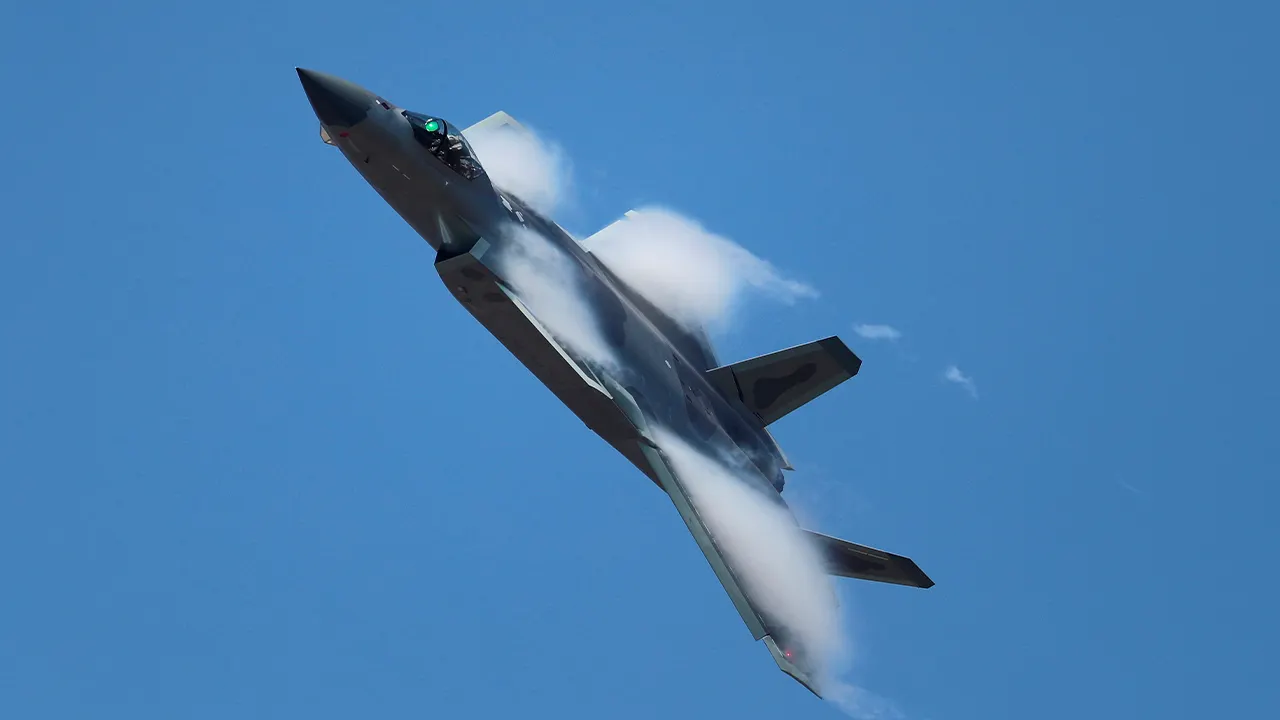
The Chengdu J-20, the China Flagship Fighter, is powered by the new WS-15 engine, a home-built PowerPlant developed by the US-based Rivas.
“It took them a while to get out of the blocks in the fifth generation, especially to get to work anywhere near where we fifth gen,” Hesbotham said. “The IJ-20 doesn’t really have many of the performance features that the F-22 does, and we’ve had the F-22 for a long time.”
Meanwhile, China’s third aircraft carrier, the Fujian, deployed this fall – the first with electromagnetic cats similar to US Ford-Class Carriers. The submission of Beijing’s desire to launch stealth jets from the sea and the well-managed forces of its coast.
Together, the J-20, the Carrier-based J-35, and the FUJIAN provide China with an established airpower network – mature jets on land and at sea supported by the Missile.
Chinese military documents identify airfields as sensitive areas. Pla Campaign Mainks calls for strikes at the beginning of the conflict to paralyze the enemy’s operations before they begin. Analysts believe several days of combined fire could destroy US bases in Japan, Okinawa, and Guam.
“US forward bases – especially in Okinawa, but also in Mainland Japan and Guam – are being exposed to Chinese Missile attacks,” said Mark Concion, Selive Marine Colonel and Senior Advisor. “In our war games, the Chinese can occasionally drift in with these missile bases and spend dozens, sometimes hundreds, flying in the air.”
Hegsbotham said the overall negative strategy grew out of China’s initial weakness.
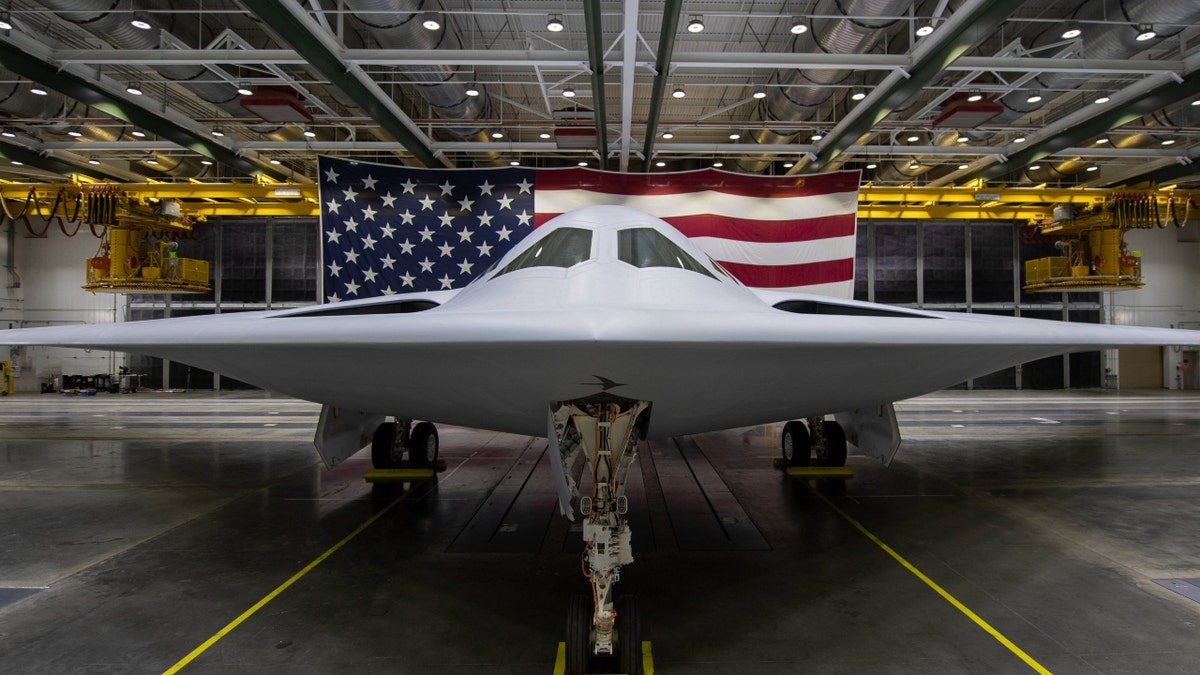
The B-21 Raider is the next generation nuclear bomber of the Nzuzo generation. (US Air Force photo)
“They didn’t think they could get air development in a direct anti-aircraft environment,” he said. “So you need another way to get missiles – and the other way is to build more launchers for the world.”
Different strategies, same goal
These two events take different approaches to the same stone: Air dominance over the Pacific.
The US approach relies on small numbers of highly advanced aircraft linked by sensors and artificial intelligence. Goal: Strike first, from a long distance, and survive in the sky.
China’s model depends on Volume – Mass-produced fighters, missiles and corporate filters that bother to defeat US defenses and information assets.
“US fighter jets—F-35S, F-15S, F-22S—are short-legged, so they have to be close to Taiwan if they’re going to be part of the war,” Cancian said. “They can’t fight Guam, and they certainly can’t fight at a distance. So if they’re going to fight, they have to be inside the Chinese protection bubble.”
Both sides face the same challenge: Survival within that bubble. China’s expanding range is pushing US aviation away from combat, while American bombers and drones are designed to push back.
Fighting to survive
Heginbotham said survival – not changing dogs – will define the next decade of air racing.
“We keep talking about the plane like it’s World War II – they go up, they fight. That’s not really our problem,” he said matter-of-factly. “Our problem is that the wind sets itself and the fact that the planes can be destroyed in the air base.”
US Navy Sea Hawk helicopter, F/A-18F Super Hornet Fighter Jet descends on South China Sea incidents
China, he warned, is preparing for reality while the US is not.
“They’re used to the demands of the runway in practice, they do this all the time,” Heginbotham said. “Unlike the United States, China has hardened its air bases. The US is a criminal problem in its denial of its air bases.”
CONCIAN’s War-Game Discovery CONCIAN finds vulnerability. He said US service ships may have to come back under heavy fire in the early days of the conflict.
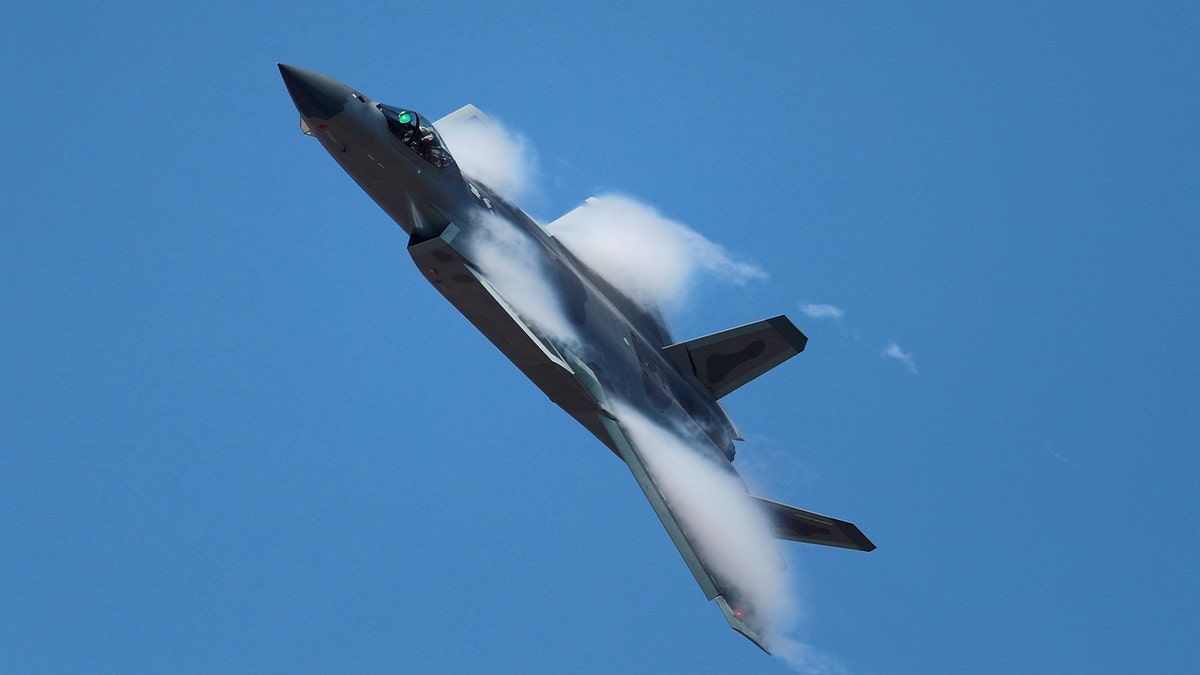
Chengdu J-20, Flagship Fighting stealth fighter, is equipped with the new WS-15 engine, a home-built PowerPlant designed to Powert to rival US engines. (China daily via Reuters)
“In the early stages of the conflict, China would have a distinct advantage,” Cancian said. “Now, over time, the US will be able to strengthen its power, and that will change.”
You are looking forward
The Pentagon’s 2026-27-27 budget will determine whether we can rapidly build F-47s, B-21s, and CCAs – the systems that will shape American Airpower in the 2030s.
China’s rapid modernization closes what used to be a wide gap, but we still hold advantages in stealth integration, combat experience, and autonomous systems.
“The ability to protect our aircraft, no matter what issue those aircraft take, on the ground will be central to our ability to fight in the Asia Theater,” He Gosbotham said.
Click here to download the FOX News app
“Survival will be the key … The ability to protect and disperse your firepower will be central to what we can really live in this game.”
For decades, it has been taken for granted. In the Pacific, that benefit was not guaranteed.